May suit
- Mild-to-moderate upper eyelid skin laxity
- Selected lower eyelid fine lines
- Patients hoping to avoid surgical incisions
FACIAL AESTHETICS IN PAPHOS
Non-surgical eyelid tightening, also referred to as bloodless blepharoplasty or soft surgery, can help selected patients with mild-to-moderate eyelid skin laxity who want to avoid or postpone surgical blepharoplasty. Treatment is performed using the authentic PLEXR Plus plasma device, an FDA-cleared electrosurgical device that allows precise and controlled treatment in delicate eyelid areas.
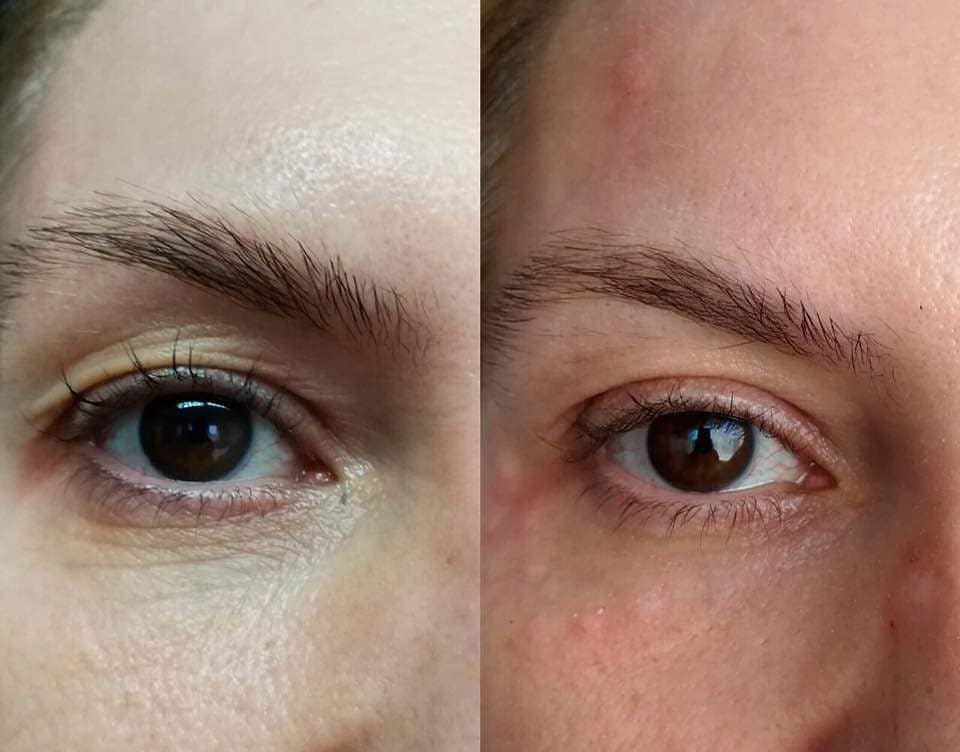
Non-surgical eyelid tightening is a treatment designed to improve mild-to-moderate eyelid skin laxity without surgical incisions. It is sometimes described as bloodless blepharoplasty or soft surgery. One technique uses plasma energy to create very small controlled points on the skin surface, stimulating tightening and remodeling during healing.
At our practice in Paphos this treatment is performed using the authentic PLEXR Plus plasma device, an FDA-cleared electrosurgical device used with precision in delicate periocular skin.
PLEXR uses controlled plasma energy generated from the interaction between the device tip and the skin surface. This creates micro-points that lead to localized contraction of superficial skin layers.
During healing, collagen remodeling may contribute to gradual tightening of the treated area.
Non-surgical eyelid tightening is generally considered for patients with mild-to-moderate eyelid skin laxity who prefer to avoid or postpone surgical blepharoplasty.
A consultation allows careful evaluation of eyelid anatomy, skin quality, and expectations.
Some patients may ultimately benefit more from surgical eyelid procedures depending on the degree of excess skin. If the main issue is instead dynamic crow's feet, superficial creasing outside the eyelid itself, or general skin quality, other pages in the aesthetics section may be more relevant.
Following plasma treatment, small superficial crusts form at the treatment points and usually resolve over several days. Mild swelling and redness may occur during early healing.
The treated skin gradually settles as healing progresses.
Patients receive detailed post-treatment guidance to support proper healing.
For patients with significant eyelid skin excess or pronounced eyelid changes, surgical blepharoplasty may provide more predictable results.
Non-surgical tightening should be viewed as a potential option for carefully selected cases rather than a replacement for surgery in all situations. It is also not a substitute for wrinkle-relaxing treatment when the main issue is muscle-driven lines, or for peels and mesotherapy when the main issue is skin quality.
PLEXR is a device that uses controlled plasma energy to create very small treatment points on the skin surface. These points lead to localized contraction of the superficial skin layer and gradual remodeling during healing.
For selected patients with mild-to-moderate eyelid skin laxity, this can provide a non-surgical option when surgical blepharoplasty is not desired.
Facial aesthetics
Explore wrinkle-relaxing treatments when the concern is muscle-driven lines rather than eyelid skin laxity.
Learn about PLEXR plasma wrinkle reduction for selected crow's feet, cheek lines, and localized tightening outside the main eyelid indication.
Facial peels and mesotherapy are more relevant when texture, radiance, or hydration is the priority rather than eyelid skin excess.
When skin excess is more significant, blepharoplasty consultation can help clarify whether surgery is the better fit.
No. Plasma treatment is a non-surgical option used for selected cases of mild-to-moderate eyelid skin laxity, while blepharoplasty is a surgical procedure used for more significant skin excess and structural eyelid changes.
When used by an appropriately trained physician and for the right patient, plasma treatment can be a suitable option for delicate eyelid skin. As with any procedure, proper assessment matters and potential risks include swelling, prolonged redness, pigment change, delayed healing, or scarring.
Small crusts form at the treatment points and usually shed over several days. Mild swelling and redness are common early on, especially around the eyes, and the skin then settles gradually over the following days to weeks.
Aftercare usually focuses on protecting the treated skin while it heals. Patients are advised not to rub or pick the crusts, to follow the post-treatment instructions carefully, and to avoid excess sun, heat, and other irritation during the early healing period.
Some change may be visible once the initial crusting and swelling settle, but improvement is usually more gradual as healing progresses. The final appearance is judged after the skin has had time to recover and tighten.
Sometimes one session is enough, but some patients benefit from more than one treatment depending on the degree of eyelid skin laxity and the result they want. This is best decided after assessment and follow-up.
For selected patients, it can be an alternative to surgery. Many choose it to avoid incisions, surgical scarring, and longer downtime, but suitability still depends on eyelid anatomy, the degree of skin laxity, and the result being sought.